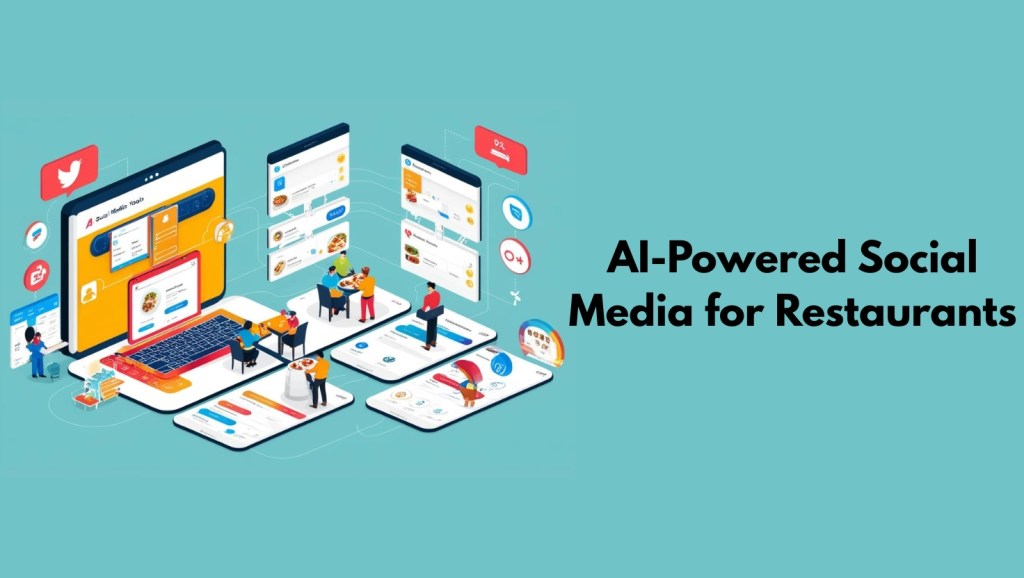
In today’s digital-first world, a restaurant’s online presence matters just as much as its food and service. Social media has become a crucial platform for restaurants to connect with customers, showcase their dishes, and build community loyalty. However, consistently managing social media can be overwhelming, especially for small business owners juggling daily operations.
This is where AI in restaurants is starting to show real promise. Artificial intelligence tools are no longer limited to kitchen automation or inventory tracking. They are now stepping into the marketing space, offering solutions that can save time and improve engagement across platforms.
This blog will explore how AI can automate social media engagement specifically for restaurants. You will learn what these tools can do, how they are already helping businesses like yours, and what steps you can take to get started. If you are looking for smarter ways to manage your restaurant’s online presence, you are in the right place.
The Role of Social Media in Restaurant Marketing
Social media has transformed how restaurants reach and interact with customers. Platforms like Instagram, Facebook, and TikTok are no longer optional. They are vital tools for staying visible in a competitive industry.
Through social media, restaurants can build relationships with their audience. They can showcase new menu items, promote events, and gather customer feedback in real time. However, managing daily posts, replying to comments, and staying consistent requires time and effort that many restaurant owners simply do not have.
That is why mastering social media marketing for restaurants is no longer just a trend. It has become a business need. A strong social presence helps attract new customers, increase repeat visits, and improve brand loyalty. But for many, keeping up with content creation and community engagement feels like a full-time job on its own.
AI tools can step in to lighten that load, making it easier to stay consistent and connect meaningfully with your audience. In the next section, we will look at exactly what these tools can do for your restaurant’s social media strategy.
What AI-Powered Social Media Tools Can Do
Artificial intelligence can handle many repetitive and time-consuming tasks that come with managing a restaurant’s online presence. These tools are designed to simplify your workflow and improve how you connect with your audience.
One major benefit is content generation. AI can help you write posts faster and with more creativity. It can suggest image ideas, trending hashtags, and even generate complete restaurant social media post captions that match your brand’s tone. This means you no longer have to stare at a blank screen wondering what to write.
AI tools can also manage your messages. With automated replies and chatbot features, customers get fast responses to common questions like opening hours or reservation policies. Some tools even use sentiment analysis to flag negative comments so you can respond quickly and professionally.
Scheduling is another important feature. AI tools can analyze past engagement data to find the best times to post. They help you stay consistent without being glued to your phone all day.
Finally, AI can track performance. It provides insights into which posts work best, who your audience is, and what content drives the most interaction. These analytics help you make smarter marketing decisions without having to guess.
Real-World Examples of AI in Action
Many restaurants have already started using AI tools to improve how they manage social media. These tools help reduce manual effort and allow teams to focus more on food and service while still keeping their audience engaged.
Consider a local café that struggled to respond to social media messages during busy hours. After integrating a chatbot tool, they were able to respond instantly to customer questions about opening times, menu options, and table availability. This improved customer satisfaction and reduced missed opportunities.
Another example is a family-owned diner that used AI to create weekly social media schedules. The tool automatically generated captions, selected the best posting times, and recommended images based on past performance. The owner noticed a steady increase in post engagement and more visits from first-time customers.
Some restaurants use platforms like Jasper or ChatGPT to draft content ideas and caption templates. Others use tools like ManyChat to build automated messaging flows for Facebook and Instagram. These solutions work quietly in the background while keeping the brand active and responsive online.
These real-world cases show that AI is not just for large chains with big budgets. Smaller businesses are also using it to stay competitive and maintain a strong digital presence without burning out their team.
Benefits of Using AI for Social Media Engagement
AI tools offer a range of advantages for restaurants looking to strengthen their presence on social media. One of the most important benefits is the time saved. Tasks that used to take hours can now be completed in minutes. This allows restaurant owners and staff to focus more on serving customers and less on managing digital content.
Another key benefit is consistency. AI helps maintain a steady posting schedule without requiring constant attention. It also ensures that your brand voice stays uniform across all platforms. This helps build trust and familiarity with your audience.
Customer satisfaction also improves when AI tools are in place. Quick responses to questions and messages create a smoother experience for potential and returning guests. When people feel heard and valued, they are more likely to visit again and recommend your business to others.
Data-driven decisions are another major advantage. AI tools analyze audience behavior, post performance, and engagement trends. These insights help you understand what works and what does not. You can then adjust your content strategy based on actual results instead of guesswork.
Finally, AI makes it easier to adapt to trends. It can suggest relevant topics or hashtags based on what is currently popular. This helps your restaurant stay visible and relevant in a fast-moving digital landscape.
Common Concerns and Limitations
While AI tools offer many advantages, some restaurant owners may still feel uncertain about using them. One of the most common concerns is the fear of losing the human touch. Many believe that automation might make their online presence feel cold or impersonal. However, with careful customization, AI can still reflect your brand’s personality.
Another limitation is the need for oversight. Although AI can generate content and respond to messages, it is not perfect. You still need to review its work to ensure accuracy and tone. Without regular monitoring, automated posts or replies could misrepresent your business.
Learning to use new tools can also feel overwhelming at first. Many AI platforms offer multiple features, which can be confusing for someone who is not familiar with them. It is important to start simple and take time to explore one feature at a time.
Data privacy is another issue to consider. AI tools often require access to your social media accounts and customer interactions. Restaurant owners must choose tools that follow strict privacy policies and keep user data secure.
How to Get Started with AI Social Tools in Your Restaurant
Getting started with AI tools does not require a technical background or a large budget. The process can be simple and manageable if you take it step by step.
First, assess your current social media routine. Identify where you spend the most time. It could be replying to messages, creating posts, or planning a content schedule. This will help you choose the right tool for your specific needs.
Next, research AI tools that are designed for small businesses or restaurants. Some tools specialize in writing captions and generating content. Others focus on managing messages or analyzing post performance. Choose one tool to begin with instead of trying to use several at once.
Start small. For example, you can begin by using AI to generate your weekly posts or schedule content in advance. As you become more comfortable, you can explore other features like automated replies or performance tracking.
Track your results. Most AI platforms include basic analytics that show how your posts perform over time. Use this data to adjust your strategy and improve your content.
Lastly, make sure your brand voice is clear. Train the AI tool by reviewing and editing its suggestions during the early stages. This will help it learn your tone and create content that feels authentic to your restaurant.
Future of AI in Restaurant Marketing
The use of artificial intelligence in marketing is expected to grow rapidly in the restaurant industry. As more tools become available, restaurant owners will have even more ways to connect with their audience and improve customer experience.
One area with growing potential is personalized marketing. AI tools will be able to analyze customer behavior and preferences in greater detail. This means restaurants can offer tailored content, promotions, and recommendations based on individual interests.
Another development is the integration of voice and visual technology. Features like voice assistants, smart menus, and visual search are expected to become more common. These tools can enhance the ordering process and create a more interactive experience for customers.
AI will also continue to improve in content generation. It will become better at understanding brand tone, customer feedback, and industry trends. This will allow restaurants to create stronger content with less effort.
Adopting AI early gives businesses a competitive edge. Those who use these tools effectively will stand out in a crowded market and build stronger relationships with their audience.
Conclusion
Social media plays a key role in shaping how customers view and interact with your restaurant. Managing that presence, however, takes time and consistency. This is where AI can make a real difference. From generating content to replying to messages and analyzing performance, these tools offer real solutions to everyday challenges.
We explored how AI in restaurants is not limited to kitchen operations. It is now making a strong impact on digital marketing as well. With tools that can help write captions, schedule posts, and track engagement, it has become easier to manage social media marketing for restaurants without constant manual work. Even tasks like crafting effective restaurant social media post captions can now be handled with accuracy and speed.
If you are new to AI, start small. Choose one tool, automate a single task, and watch the results. As you get comfortable, you can expand your use of AI and see greater benefits over time.
 Restaurant AI Tech
Leave a comment